Millennials grew up watching movies like How to Train Your Dragon, and now they’re buzzing with excitement over House of the Dragon. Naturally, this leads to the ultimate fantasy: “I watched a dragon myself.”
But is that really possible?
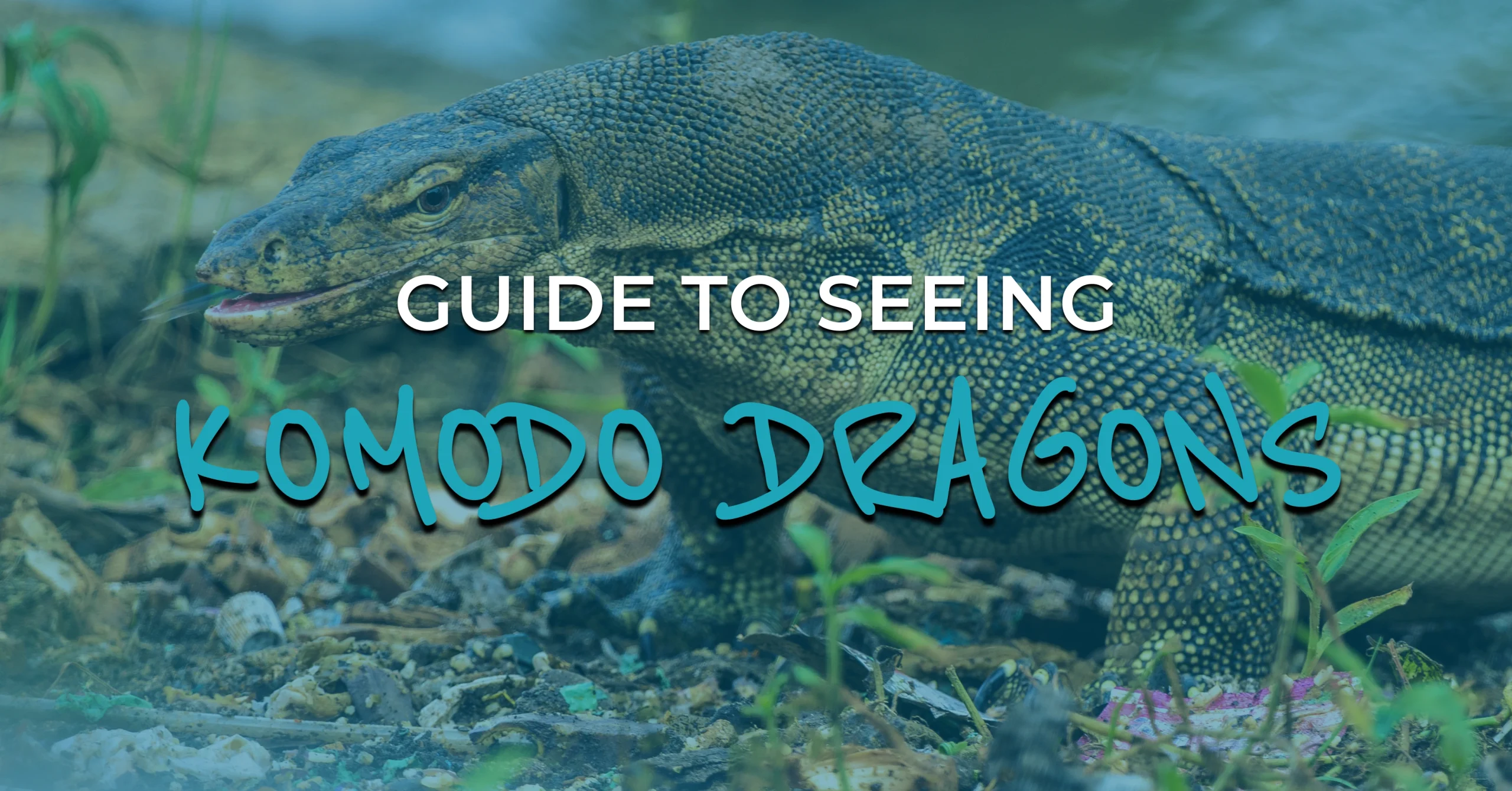
Well, if you’re someone who dreams of witnessing a real, living dragon, you’re in luck, because Komodo dragons still roam the Earth today. These incredible creatures, the only living species of “dragons” in the 21st century, are famously found in Indonesia, particularly in the Komodo National Park region.
One of the beautiful places where they can be spotted is Waecicu Beach, located in the Labuan Bajo area of Flores Island. These beautiful and mesmerizing beasts are found only in 4 out of 17,000 islands in the entire world. I personally know that witnessing these precious creatures right in front of my eyes has been on my bucket list for years.
But to see a nature’s wonder like this, one must be prepared and educated on all about Komodo Dragons and I am confident, my guide is enough for that. Read below to find out all about Komodo Dragons.
What Are Komodo Dragons?
A world with 197 countries but dragons found in only one of them is bound to be extraordinary. These creatures are famous across the globe, and for good reason. Beyond their powerful name, dragons are truly captivating beings, beloved by both kids and adults alike.
With only about 3,000 individuals remaining in the wild, Komodo dragons are now considered an endangered species. Komodo dragons (Varanus komodoensis) are the largest lizards on Earth and the closest living animals to mythical dragons. Native only to a small cluster of Indonesian islands, they have fascinated scientists, adventurers, and nature enthusiasts for decades. With their muscular bodies, sharp claws, venomous bite, and ancient lineage, they are one of the world’s most extraordinary predators.
Despite their nickname “dragons,” Komodo dragons are not fire-breathing creatures of legend, they are real, powerful reptiles that have evolved over millions of years to dominate their isolated island habitats. They are kept safely in the Komodo National Park which is a global tourist attraction.
A tourist tip is to follow the instructions of Komodo National Park closely because these rules are solely for the safety of the tourists.
The Experience of Visiting the Komodo Dragons
Visiting Komodo National Park means walking on foot among the world’s largest living lizards, the legendary Komodo dragons. Their scientific name, Varanus komodoensis, sounds dramatic enough to belong to the Targaryen bloodline, and their appearance certainly lives up to it. Though not as massive as the dragons of Westeros, real Komodo dragons can still grow up to 3 meters (10 feet) in length and weigh as much as 135 kilograms (around 300 pounds). Their powerful jaws hold shark-like teeth, positioned roughly at human calf height, and their venom is known to cause severe bleeding and shock in prey.
While Komodo dragons often appear calm or sluggish, especially when digesting a meal, during which they may lie motionless for hours, this is deceptive. They are capable of explosive speed and can outrun a human in short bursts when they choose to. During the mating season (mainly June to July), males engage in dramatic dominance battles and unusual courtship displays that involve wrestling, scratching, biting, defecating, licking, and even vomiting. During this time, it is recommended to stay away from these creatures. Fascinating as this might be to the female dragons, it’s definitely a spectacle visitors are better off observing from a safe distance.
How you will actually encounter Komodo dragons as a visitor:
When you visit Komodo or Rinca Island, the dragons are completely wild and free-roaming. They are not kept in enclosures, are not chained, and are not viewed from vehicles. This allows you to witness them in their natural habitat which is the truest experience.
- You will walk through their natural habitat on marked trekking paths, always accompanied by a licensed ranger.
- The rangers know where dragons commonly rest, hunt, or sunbathe, increasing your chances of safe sightings.
- Dragons may appear near the ranger station, along forest trails, or resting under trees, they roam wherever they please.
- Visitors observe them on foot, keeping a strict distance, with rangers ready to step in if any dragon approaches too closely.
There are no safari cars, fences, or pens, this is a natural, open environment, and you’re essentially a guest in the dragons’ territory. That’s what makes the encounter unforgettable, but it’s also why following ranger instructions is mandatory for everyone’s safety. Especially for families with kids, a high level of safety and precautions are to be taken.
Here is an overview of Komodo Dragons characteristics:
World’s Largest Lizard: Characteristics & Lore
1. Size & Weight: Nature’s Heavyweights
Adult Komodo dragons are truly colossal:
- Average length: 2–3 meters (6.5–10 feet)
- Largest recorded: Over 3.1 meters
- Weight: 70–90 kg (155–200 lbs), with some males exceeding 100 kg
Their powerful limbs and long, muscular tails make them agile hunters capable of delivering strong bites and swift attacks.
2. Appearance: Scales, Tongue & Presence
Komodo dragons have:
- Thick, armored scales
- A long, yellow, forked tongue used to detect prey
Large claws - A low, muscular gait that adds to their intimidating presence
Their sense of smell is exceptional, they can detect carrion from several kilometers away using their tongue to “taste” the air.
3. Hunting Prowess: Venom, Strategy & Patience
Contrary to old myths, Komodo dragons do not rely on bacteria to kill their prey. Modern research shows they possess venom glands that:
- Lower blood pressure
- Prevent clotting
- Induce shock in prey
They ambush prey such as deer, boar, and buffalo by lying still in the grasslands and lunging with incredible speed. A single bite can immobilize an animal, but dragons often track wounded prey for hours until it collapses.
4. Lifespan & Habitat
Komodo dragons typically live 25–30 years, with some individuals reaching the mid-30s in protected environments. They thrive in:
- Dry savannah
- Forest edges
- Open grasslands
- Beaches
Their entire natural range is restricted to Komodo Island, Rinca, Flores, Gili Dasami, and Gili Motang.
5. Conservation Status & Significance
Endangered Species
According to the IUCN Red List, Komodo dragons are classified as Endangered, with wild populations threatened by:
- Habitat loss
- Climate change (rising sea levels affecting nesting areas)
- Decrease in prey animals
- Human encroachment
Fewer than 6,000 Komodo dragons remain in the wild.
6. Ecological Role
Komodo dragons are apex predators. Their presence helps maintain a balanced ecosystem by:
- Controlling herbivore populations
- Preventing overgrazing
- Supporting healthy food webs
7. Global Recognition
Their size, rarity, and prehistoric appearance make them global icons of wildlife conservation. Komodo dragons are considered natural wonders and are deeply protected by Indonesian law.
Komodo National Park: The Dragons’ Domain
Komodo National Park is one of the most extraordinary places on Earth, a true sanctuary where these prehistoric giants still roam. Established in 1980 by the Indonesian government, the park was created with a clear mission: to protect the last remaining population of Komodo dragons. Here they are in their safe habitat with an atmosphere that highly appeals to them and is suitable not only for their life but also for their reproduction. This great initiative is commended by people worldwide.
Just over a decade later, in 1991, UNESCO recognized its global importance and declared it both a World Heritage Site and a Man and the Biosphere Reserve. This recognition wasn’t only because of the dragons, but also because of the park’s remarkable diversity, both on land and beneath the waves.
Covering 1,733 square kilometers, Komodo National Park is vast and varied. It includes the three major islands, Komodo, Rinca, and Padar, as well as dozens of smaller rocky islets and an enormous stretch of marine territory. These islands, with their rugged hills and sunbaked savannahs, form the perfect habitat for the dragons. Meanwhile, the surrounding turquoise waters hold some of the richest coral reefs on the planet, drawing divers and nature lovers from around the world.
The park’s purpose is simple yet crucial:
- To safeguard the Komodo dragons
- To protect their dry savannah landscape
- And to preserve the exceptional marine ecosystems that make this region so unique
What Type of Ecosystem is Preferred by Komodo Dragons?
One of the most breathtaking aspects of Komodo National Park is the dramatic contrast between its landscapes. On land, the environment shifts between open savannah, clusters of tamarind trees, and groves of lontar palms, giving the park a wild, ancient feel that seems frozen in time. These dry habitats are exactly what Komodo dragons need, they love to bask in the sun, nest in the sandy soil, and stalk prey among the grasses.
But while the land is impressive, the underwater world is nothing short of magical. Just beneath the surface lies one of Earth’s most vibrant marine ecosystems. The park boasts:
- Over 1,000 species of fish
- More than 260 species of corals
- Regular sightings of sea turtles, reef sharks, manta rays, and dolphins
Whether you’re snorkeling or diving, the reefs here feel like a living, breathing kaleidoscope.
Komodo National Park is also rich in wildlife beyond its iconic dragons. Visitors often spot Timor deer, the dragons’ favorite prey, as well as wild boar, water buffalo, and the distinctive orange-footed scrub fowl. Bird watchers will find dozens of species soaring above the hills or resting in the coastal forests.
Together, these ecosystems, dry, rugged landscapes paired with crystal-blue oceans, create a world where prehistoric reptiles and modern marine life coexist in a delicate and awe-inspiring balance. It’s a destination that feels both untouched and deeply alive, offering travelers a chance to witness nature at its most raw and spectacular.
What are Komodo National Park Regulations and Guidelines?
| Category | Details |
| Permits & Entry Fees | · All visitors must pay official park entrance fees.
· Fees vary based on day (weekday/weekend) and activities such as trekking, diving, or snorkeling. · Revenue supports conservation and ranger operations. |
| Guided Tours Requirement | · Visitors cannot walk freely on Komodo or Rinca Islands.
· A licensed park ranger must accompany all groups at all times. · Required for safety due to the dragons’ unpredictable and potentially dangerous behavior. |
| Rules of Conduct | · Do not approach, touch, or provoke wildlife.
· Stay strictly on marked trails. · No drones without special permits. · No feeding animals under any circumstances. · No littering; follow Leave No Trace principles. |
Best Islands to See Komodo Dragons
1. Komodo Island
- Name of the Park: Komodo National Park
- Location: East Nusa Tenggara, Indonesia
Komodo Island is the most famous place in the world to see Komodo dragons with the largest population here, in their natural habitat. The landscape here is rugged and wild, with dry hills, savannah grasslands, and pockets of forest, the perfect environment for these massive reptiles to thrive. Visitors walk along marked trekking routes, accompanied by licensed rangers who know exactly where dragons like to rest, hunt, or sunbathe.
The island offers multiple trails of varying difficulty, making it suitable for both casual walkers and adventure seekers. Because of its larger dragon population, sightings are common around the ranger station and throughout the trekking paths.
Known for:
- Largest population of Komodo dragons
- Scenic trekking routes (short, medium, long)
- Beautiful beaches and rugged landscapes
Things to Know:
- Rangers are mandatory for all visitors
- Dragons are wild and free-roaming
- The island can get hot — bring water and sun protection
2. Rinca Island (Rincha Island)
- Name of the Park: Komodo National Park
- Location: East Nusa Tenggara, Indonesia
Rinca Island is often considered the best place for guaranteed dragon sightings due to its terrain and the behavior of its dragon population. The landscape is slightly flatter than Komodo Island, making the treks easier for visitors. Dragons are frequently seen near the ranger post, resting in the shade or wandering the open savannah.
The island retains a very raw, wild feel, offering a close-to-nature experience while still being accessible. Many tours visit Rinca because it’s closer to Labuan Bajo, reducing travel time while still giving visitors an unforgettable encounter.
Known for:
- High chances of spotting dragons
- Easier, flatter trails
- Quick access from Labuan Bajo
Things to Know:
- Perfect for short day trips
- Can get crowded during peak season
- Dragon encounters are often near the ranger station
3. Gili Motang
- Name of the Park: Komodo National Park
- Location: East Nusa Tenggara, Indonesia
Gili Motang is a small and remote island known for its volcanic landscape and quieter wilderness. Although fewer tourists visit, the island hosts a small but stable population of Komodo dragons. The experience here feels untouched and extremely remote, offering a glimpse of nature far from the usual tour routes.
Because it’s not a standard stop on most tour itineraries, reaching Gili Motang requires special arrangements or private charters. However, for wildlife enthusiasts seeking solitude, this island offers a rare, off-the-beaten-path experience.
Known for:
- Small, isolated population of dragons
- Rugged volcanic landscapes
- Very low tourist traffic
Things to Know:
- Not included in most standard tours
- Requires special permits or custom boat trips
- Ideal for experienced travelers seeking solitude
4. Gili Dasami
- Name of the Park: Komodo National Park
- Location: East Nusa Tenggara, Indonesia
Gili Dasami is another remote island home to a modest Komodo dragon population. Like Gili Motang, it is not commonly visited, making it a pristine and peaceful environment. The terrain is dry and rocky, with limited human activity, giving a very raw impression of how dragons live without tourist interference.
Most visitors will never reach this island, which helps maintain its ecological balance. Those who do are typically part of research teams or private expeditions.
Known for:
- Remote and untouched dragon habitat
- Extremely low human presence
- Pure wilderness experience
Things to Know:
- Not accessible via regular tour boats
- Requires private or research-level arrangements
- Limited facilities — completely undeveloped
5. Flores Island (Certain Regions Only)
- Name of the Park: Not part of the official Komodo National Park, but dragons exist naturally
- Location: Eastern part of Flores, near coastal villages
A lesser-known fact is that Komodo dragons also exist in small pockets of mainland Flores. These populations live in remote forests and coastal areas, far from human settlements. While sightings here are rare for general tourists, they confirm that Komodo dragons historically roamed a wider region.
Seeing dragons on Flores typically requires joining scientific expeditions or community-guided treks arranged by local villages that coexist with these reptiles.
Known for:
- Off-park, natural dragon populations
- Cultural experience with local communities
- More rugged and unpredictable encounters
Things to Know:
- Not recommended for first-time visitors
- Tours must be arranged locally with expert guides
- Dragons here are more elusive and harder to spot
Tips for Traveling to Indonesia to See Komodo Dragons
Visiting Komodo National Park is an unforgettable experience, but it requires careful planning to make the most of your trip safely and comfortably. Every year, over 100,000 tourists venture to the park to see Komodo dragons in the wild, explore pristine islands, and snorkel among vibrant reefs. To ensure a smooth and memorable adventure, here are some essential travel tips, I recommend to people visiting Indonesia for the first time or maybe the 10th time!
Safety Equipment
Komodo dragons are wild, powerful animals, so safety should always be your top priority. Always follow your ranger’s guidance, carry a first-aid kit, and bring items like a whistle, water bottle, and sturdy shoes. Binoculars and a zoom camera lens are also helpful for observing dragons from a safe distance without disturbing them.
Best Season to Visit
The dry season (April to December) is ideal for spotting Komodo dragons and enjoying calm seas for snorkeling and diving. The wet season (January to March) brings more rainfall, which can make trails slippery and dragon sightings less predictable. Planning your visit during the dry months maximizes safety, comfort, and visibility.
Clothing Items
Pack lightweight, breathable, and quick-drying clothing for daytime treks. Long pants and closed-toe shoes are essential to protect against rough terrain, thorny shrubs, and potential dragon encounters. A hat, sunglasses, and sunscreen are also recommended, as the tropical sun can be intense during treks and island excursions.
Visa Regulations
Most international travelers need a visa to enter Indonesia, though many countries are eligible for a Visa on Arrival for 30 days. Always check the latest visa regulations for your nationality before traveling. It’s also advisable to carry a photocopy of your passport and any travel permits for Komodo National Park.
Budget Planning
Visiting Komodo National Park can range from budget-friendly day trips to luxury multi-day liveaboard cruises. Consider entrance fees, ranger fees, transport, accommodation, and meals when planning your budget. Booking in advance often helps secure better rates and ensures availability during peak season.
Number of Days Required
For a meaningful experience, plan at least 3–4 days. This allows you to visit both Komodo and Rinca Islands, explore highlights like Padar Island and Pink Beach, and even enjoy snorkeling or diving. Shorter trips may feel rushed and limit your chances of spotting dragons or fully appreciating the park’s landscapes.
Choosing a Tour Operator for Komodo National Park
Selecting the right tour operator is crucial for a safe and enjoyable Komodo adventure. Since all visits to Komodo and Rinca Islands require a licensed ranger, your choice of operator directly affects your experience, comfort, and safety.
What to Look For:
- Licensed Guides: Ensure the operator provides official park rangers to accompany all treks. This is mandatory for safety and compliance with park regulations.
- Strong Safety Records: Check whether the company maintains well-equipped boats, trained crews, and proper emergency protocols.
- Good Reviews: Reading feedback from previous travelers can give insight into reliability, professionalism, and overall quality of service.
Recommended Operators:
- Perama Tour: Offers a variety of day trips and liveaboard options with excellent safety standards.
- Flores XP: Known for immersive multi-day adventures and knowledgeable guides.
Wunderpus Liveaboard: Ideal for diving enthusiasts and those seeking an extended, luxury experience. - Local Licensed Charters: Smaller operators provide flexible itineraries and closer encounters with local culture.
Choosing a reputable tour operator ensures you not only see Komodo dragons safely but also enjoy a seamless, memorable experience exploring the islands, beaches, and marine wonders of Komodo National Park.
Conclusion
A trip to Komodo National Park is a life-changing experience. From witnessing the raw power of Komodo dragons to exploring vibrant coral reefs and iconic landscapes, this journey offers the perfect blend of adventure, wildlife, and natural beauty.
With proper planning, safety awareness, and respect for the environment, visitors can enjoy the magic of this ancient species while contributing to its protection.
Frequently Asked Questions
- Are Komodo dragons dangerous?
Yes, they are powerful predators, but incidents are extremely rare if you always follow your ranger’s instructions. - Can children visit Komodo National Park?
Yes, children can visit, but they must be closely supervised by adults and accompanied by a licensed ranger. - When is the best time to see dragons?
The dry season (April–December) is ideal, as dragons are more active and trails are easier to navigate. - Do I need special permits?
No special permits are required beyond the park entrance and mandatory ranger fees. - Can I visit Komodo without a tour?
No, independent visits are not allowed. All treks require a tour and licensed ranger for safety reasons.