
People rarely ask this in a general way. They ask something specific and slightly worried: whether their daughter should go alone, whether the scooters are as bad as the videos suggest, whether the new Indonesian law they read about applies to a couple on honeymoon.
So rather than answer is Bali safe to travel to with a reassuring paragraph and a list of platitudes, here is the useful version. Bali is a safe destination by most measures, and Indonesia recorded 6,948,754 international arrivals to the island in 2025, close to ten percent up on the year before. Almost all of those people went home with nothing worse than sunburn.
The risks that do exist are not the ones most travellers worry about. Nobody is going to mug you on Jalan Legian. You are far more likely to come off a rented scooter on wet tarmac at night, or to lose your phone to somebody passing on a motorbike.
This guide ranks the real risks in the order they occur, covers the Bali scams worth recognising, explains the 2026 criminal code that generated alarming headlines and rather less accurate reporting, and includes a section for American travellers, since consular arrangements and insurance work differently for them.
Is Bali Safe to Visit? The Short Answer
Yes. No government currently advises against travel to Bali. Indonesia carries a mid-level caution advisory from most Western governments, driven by terrorism risk and natural disasters nationally rather than by anything specific to Bali, and the only areas rated not travel are in Papua, roughly 3,500 kilometres away.
| Government | Advisory for Indonesia | Applies to Bali |
| United States | Level 2, exercise increased caution | Country-wide. Level 4 areas are in Papua only |
| Australia | Exercise a high degree of caution | Country-wide. No Bali-specific restriction |
| Canada | Exercise a high degree of caution | Same, with Papua excepted |
As set out in the US Department of State advisory for Indonesia, the country-level rating cites terrorism and natural disasters. Level 2 is the same rating carried by France, Italy and Spain. Read it as context, not as a warning about Bali.
What Actually Goes Wrong: Risks in Order of Likelihood
This is the table most Bali safety guides do not print, because listing risks alphabetically makes everything look equally probable. It is not.
| Risk | How likely | What reduces it most |
| Scooter accident | Highest by a distance | Not renting one |
| Bali belly | Very common, rarely serious | Sealed water, busy kitchens |
| Petty theft and phone snatching | Common | Bag on the pavement side, phone away near roads |
| Scams and overcharging | Common, low cost | Prices agreed in advance |
| Rip currents | Uncommon but serious | Swimming only at patrolled beaches |
| Animal bites | Uncommon | Not touching dogs or monkeys |
| Drink spiking and methanol | Rare, severe | Sealed drinks at established venues |
| Violent crime against tourists | Rare | Ordinary precautions |
Scooters, and Why We Keep Saying No
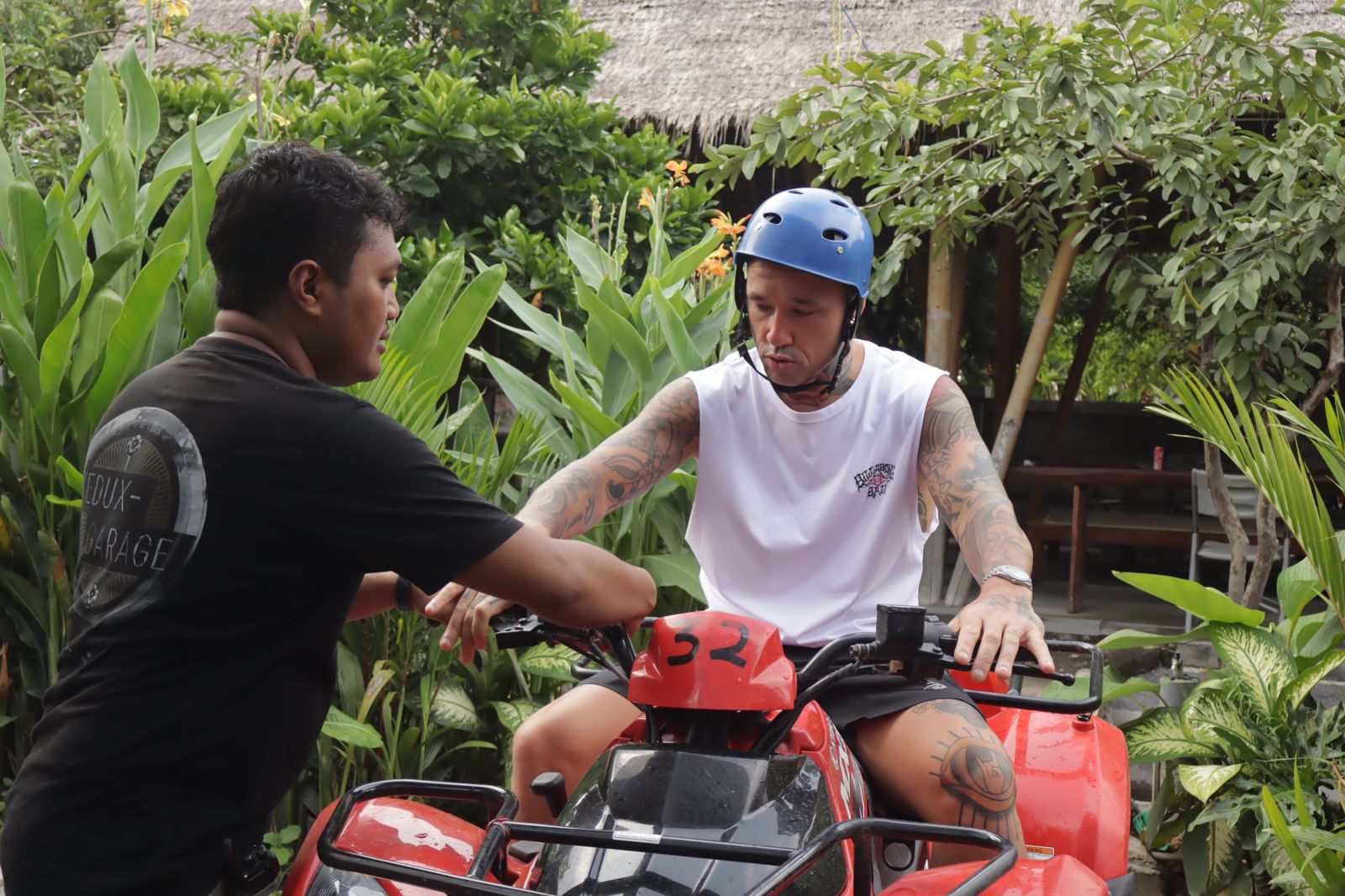
Motorbike crashes cause more serious injury to visitors here than everything else combined. The combination is specific: unfamiliar left-hand traffic, sudden rain, sand on the tarmac near beaches, poor lighting on back roads, and riders in shorts and flip-flops with no licence.
Rent one only if you ride at home, hold an International Driving Permit with a motorcycle endorsement, and wear a proper helmet. Without the permit your travel insurance will almost certainly refuse the claim, which turns a broken collarbone into a five-figure problem. For everyone else, a private driver or a ride-hailing app is cheaper than the excess on a hospital bill.
Bali Scams Worth Recognising
- Money changers. Use authorised counters or bank ATMs. Stalls advertising unusually good rates make their margin by short-counting the handover
- Rental damage claims. Photograph every scratch on a scooter or car before you leave, with the operator watching
- The broken meter. Insist on the meter in a Blue Bird taxi, or use an app where the fare is fixed before you get in
- Transport monopolies. Some areas discourage app pickups. Walk two minutes down the road rather than argue
- ATM skimming. Prefer machines inside bank branches and shopping centres
- Temple donation pressure. Entry fees are posted and modest. Anything demanded beyond the posted price is discretionary
Water: The Underrated One
The southern and western beaches face the Indian Ocean and carry serious rip currents. Kuta, Legian and Canggu have lifeguards and flags. Many beaches do not. Swim between the flags, and if you are caught in a current, swim parallel to the beach rather than against it.
For calm water with children, the north and east coasts are a different sea entirely. Sanur and Nusa Dua are reliably gentle.
Health: The Three That Matter
- Rabies. Bali is rabies-endemic. Do not touch stray dogs, and keep your distance from the macaques at Ubud’s Monkey Forest and Uluwatu, which bite and scratch more than people expect. Any bite or scratch means a clinic the same day, not the next morning. Post-exposure treatment is widely available and highly effective when started promptly.
- Mosquito-borne illness. Dengue is present year-round and rises in the wet season. Repellent at dawn and dusk, plus long sleeves in the evening, does most of the work.
- Methanol in bootleg spirits. Both Australian and US government advisories specifically warn about drink spiking and methanol poisoning in Bali, Lombok and the Gili Islands. The rule is simple: sealed bottles, established venues, drinks mixed where you can see them, and treat free-pour cocktail promotions in cheap bars with suspicion. Local arak from a reputable producer is fine. Unlabelled spirits are not.
Is Bali Safe for Americans?
Broadly yes, with four things worth knowing that do not apply equally to other nationalities.
- Consular help is limited. The nearest full US Embassy is in Jakarta, an hour and a half away by air. Bali has a Consular Agency, now at the Jimbaran Hub on Jl. Karangmas, handling lost passports and notarials by appointment. It is not an emergency service. Register with the STEP programme before you fly.
- There is no 911 equivalent. Emergency response is slower and less coordinated than Americans expect. Your travel insurance assistance line will usually get you to the right private hospital faster than a general emergency number. BIMC and Siloam in the south handle the most serious cases.
- Your domestic health insurance does not travel. Medicare provides no coverage abroad, and most US plans offer little or none. Buy a policy that explicitly covers medical evacuation, and check that it covers motorbikes if anyone in your party intends to ride.
- Entry rules. US passport holders need a Visa on Arrival at IDR 500,000, best purchased as an e-VOA before flying, plus the IDR 150,000 tourist levy and the free All Indonesia arrival card. Your passport needs six months of validity and two blank pages. Our visa and entry pages cover this by nationality.
One more, and it applies to everyone: Indonesia enforces severe penalties for drug offences, including the death penalty for trafficking. There is no leniency for foreign visitors and no ambiguity about it.
The 2026 Criminal Code: What It Actually Says
Indonesia’s revised criminal code, the KUHP, took effect on 2 January 2026, and the coverage generated more anxiety than the text warrants. Here is the accurate version. As reported by PBS News, sex outside marriage is punishable by up to one year in prison and cohabitation by up to six months. Critically, these are complaint offences. A case can only proceed if a legal spouse, parent or child files a complaint. A hotel, a neighbour, a stranger or a police officer cannot initiate one.
In practice this means unmarried couples on holiday are not the target and are not being asked for marriage certificates at check-in. Hotels and villas have no obligation to verify marital status. Where genuine risk exists is in relationships involving Indonesian residents, where a family member or spouse has standing to complain. Long-stay visitors and anyone in a relationship with a local should take the provision seriously. A honeymooning couple from Ohio should not lose sleep over it.
Solo Travellers, Families and Long Stays
Is Bali safe for solo female travellers? Yes, and it is one of the more comfortable destinations in Asia for it. Staying in Ubud, Canggu or Sanur puts you among a large community of solo travellers. The practical advice is unglamorous: prearranged transport at night rather than flagging something down, a drink you watched being poured, and a location shared with someone at home. Harassment is uncommon and usually verbal rather than physical.
- Families. Bali suits children well, and the constraints are drive times rather than danger. Keep journeys under ninety minutes, base yourselves somewhere with calm water, and request child seats in advance, since taxis here do not carry them.
- Living here. Is Bali safe to live is a different question with different answers. Traffic exposure rises with time, the criminal code provisions matter more for residents, and visa compliance becomes the main practical risk. Working on a tourist visa, including paid online content, is illegal and enforcement has tightened.
Planning Around It
Almost every serious incident involving a visitor traces back to one of three decisions: renting a scooter without the experience, drinking from an unknown bottle, or swimming at an unpatrolled beach. Remove those three and the remaining risk is roughly what it is at home. We plan itineraries with drivers who live here, journey times that reflect actual traffic, and hotels we have visited. If something goes wrong at ten at night, you have a number that answers.
Is Bali Safe? The Honest Summary
Is Bali safe to visit in 2026? Yes, and the honest framing is more useful than the reassuring one. The island is not dangerous. It is a place where ordinary decisions carry slightly more consequence than they do at home, because the roads are busier, the sea is stronger, and the safety net is thinner.
Get the transport right and most of the risk disappears. Tell us how long you have and what you want from the trip, and we will build the days around it. Message us on WhatsApp or through our contact page.
Frequently Asked Questions
- Is Bali safe right now?
Yes. No government advises against travel to Bali. Indonesia carries a mid-level caution advisory driven by nationwide factors, with nothing Bali-specific. - Is Bali safe for tourists in 2026?
Yes, with the same caveats as any year. The dominant risk is scooter accidents, not crime. - Is Bali safe for women travelling alone?
Generally yes. Take normal night-time precautions with transport and drinks. Serious incidents are rare relative to visitor numbers. - Is Bali safe for families with young children?
Yes. Choose calm-water areas such as Sanur or Nusa Dua, keep drives short, and bring your own child seats or request them in advance. - Do unmarried couples get turned away from hotels?
No. The 2026 provisions are complaint-based and can only be triggered by a spouse, parent or child. Hotels do not check marital status. - Is it safe to drink the water?
No. Tap water is not treated to drinking standards. Use sealed bottled water. Ice at established venues is factory-produced and fine. - Should I be worried about earthquakes or volcanoes?
Small tremors are routine and rarely felt. Mount Agung and Mount Batur are monitored continuously, with alert levels published by BMKG. - Is it safe to ride a scooter in Bali?
Only if you ride at home, hold an International Driving Permit with a motorcycle endorsement, and wear a real helmet. Otherwise use a driver. - Are monkeys dangerous?
They will take sunglasses, phones and food, and they bite. Carry nothing loose and do not feed them. Any scratch needs a clinic visit. - Do I need travel insurance for Bali?
Yes, and check it covers medical evacuation and motorbikes. Private hospital care is good but paid up front.